
Tronog is a digital studio specializing in highly advanced configurators and the creation of premium visual content.
Drawing on specialized knowledge of processes in the automotive and technical industries, they develop detailed models for the everyday needs of the automotive, technical, and fashion sectors. They continuously enhance their technical expertise by adopting best practices from international markets and are now looking to further expand their services within the domestic market.
Today, Tronog is owned by Sergej Žlahtič, Tina Bregant, and strategic partner TAL Group from Hong Kong. The company was founded by Sergej Žlahtič, with whom we also spoke. In our conversation, we first went back approximately fifteen years to recall the company’s beginnings.
“It happened while I was working in Germany. After successfully completing several projects, my employer suggested that I establish my own company. I agreed and quickly began preparing for it. I borrowed the initial capital for founding the company — including funds for salaries, equipment, and the first software licenses — from my employer at the time, as well as from my family, especially my uncle. It also would not have been possible without Tina’s father, who provided us with a small room where we set up our server and two workstations,” he explains.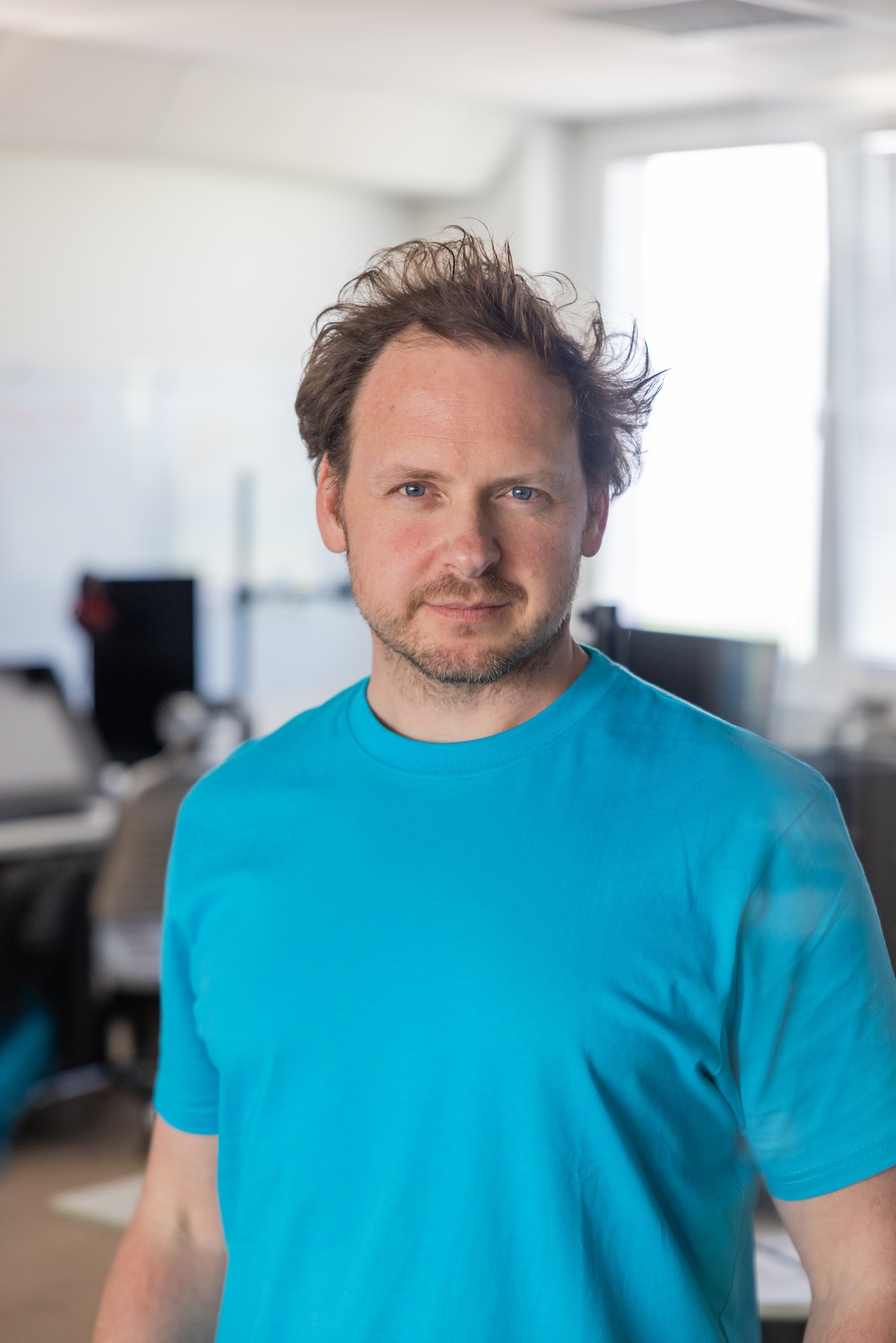
As Technical Director and member of the management board, Sergej Žlahtič leads strategic decisions in the field of digital development, oversees the technical architecture of solutions, and coordinates cross-departmental tasks within digitalization processes.
It was precisely this support that inspired the name Tronog — just as his family supported him, he wanted to build a strong pillar that would relieve clients of a significant share of their concerns.
Tronog’s Vision: To Be a Pioneer in the Development of Digital Tools
Initially, the goal was to establish a production studio that would support clients and other studios in their production processes. Over time, however, the company evolved into a technology-driven business focused on developing configurators. One of the key collaborators in this journey has been Ivan Maglica, with whom they continue to develop configurator solutions to this day.
While still a student in New Zealand, Sergej Žlahtič received recognition from the American multinational software company Autodesk for one of the best 3D images. Soon after, he began collaborating with major global brands. The studio’s first client was the automotive brand Daimler.
His personal journey — from award-winning student to collaborator with global brands — became a foundational pillar of Tronog’s vision. Together with co-owner Tina Bregant, he aimed to develop solutions that are not only technologically advanced but also strategically oriented. Above all, they sought to help companies shorten the path to their customers, optimize sales channels, and achieve stronger business results through advanced digital tools.
From the very beginning, Tronog’s objective has been to build bridges between industries — from automotive to textile and fashion — and to connect the expertise of a multidisciplinary team combining creativity, engineering, and software development. The company’s vision remains the same today: to be a pioneer in the development of digital tools that enable companies to present complex products in a clear, engaging, and accessible way.
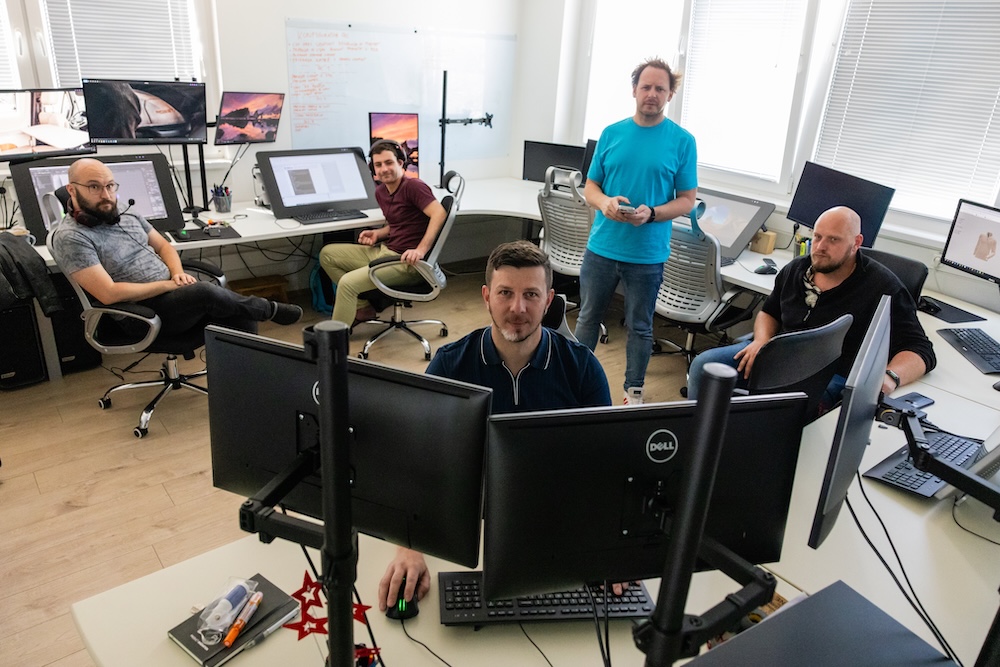
The production team combines vision, technology, and aesthetics into solutions that inspire. With a passion for detail and experience gained from the most demanding projects, they transform complex ideas into visually outstanding and user-effective digital experiences.
Drive to Work and Continuous Optimization
Reflecting on the early days, Sergej Žlahtič emphasizes that his work ethic and constant focus on optimization were essential prerequisites for later success.
“When I moved from Slovenia to New Zealand, I simultaneously shifted from a Slovenian culture and mindset to a New Zealand one. This meant learning what I call ‘free thinking,’ which I believe was crucial for me. It helped me think more broadly. Later, when I began working for the German automotive industry, I learned structured, automation-oriented thinking — and in my opinion, that combination was extremely powerful,” he explains.
One of the first major breakthroughs was a configurator developed for the Swiss sportswear and equipment brand Mammut. “They approached us and said they wanted to collaborate. We developed a project for them that lasted six weeks and was highly successful — it even received the award for the most innovative project of the year within the Mammut Group, which we were, of course, very proud of,” says Žlahtič.

Mammut Animation
This was followed by additional projects for some of the world’s most renowned brands, including Hugo Boss, H&M, Adidas, Nike, Puma, and others. In the automotive sector, they collaborate with all major German manufacturers. They adhere to the principle that every new project represents a challenge that must be elevated further and continuously improved.
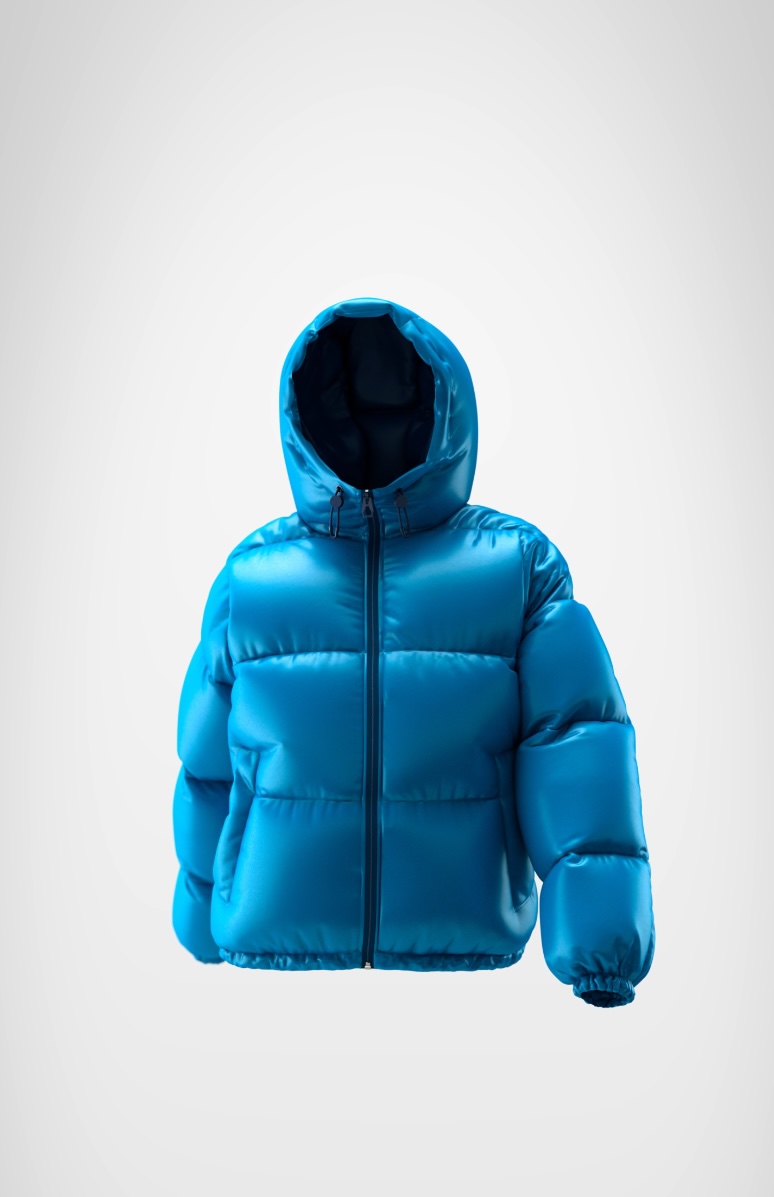
H&M Configurator Development
In Slovenia, They Observe a Lack of Long-Term Marketing Orientation
Over the past fifteen years, the company has experienced several important milestones. “One of the major ones was the transition from an ‘artistic’ studio to a technology-driven company. Another was the entry of a larger company into Tronog. This marked our entry into the market of digital humanization and the use of real and AI avatars for companies in the fashion industry. However, turning points happen constantly — it simply depends on the perspective, whether we are talking about technological or structural changes, or shifts in the market and evolving trends,” explains the interviewee.
Among the milestones, their “entry” into the Slovenian market is certainly worth mentioning. Although they have operated globally for many years — from Asia across Europe to the United States — they have only been active in Slovenia in recent years. They seek collaboration with various companies but note that entering the Slovenian market has been challenging, as they observe a lack of long-term marketing orientation.
“The Slovenian market is unique, like any other. During our operations, we realized that no two markets are the same. Slovenians are used to doing everything themselves. Because of this, it is difficult to shift toward the mindset that we don’t need to ‘interfere’ in every process. One of the challenges we observe is that abroad, we typically collaborate with multiple companies to jointly arrive at a solution. In Slovenia, collaboration is weaker. We struggle to connect and create together. We are individualists,” observes Sergej Žlahtič. As an example of a nation very open to collaboration, he mentions the Germans, who, in his words, “all strive for higher progress.” “We see this trait among Slovenians as well, but unless it is absolutely necessary, we are less likely to take the extra step,” he adds.
“We Have Experienced Great Successes and Difficult Setbacks”
Despite many successful moments, they openly acknowledge that challenges are part of the journey. “I can say that we have experienced both great successes and difficult setbacks. However, every setback has been an opportunity for growth and improvement. One of the most difficult moments occurred when, after a highly successful global project, we lost an exceptional opportunity due to a diplomatic mistake during a pitch. The project we had just completed was widely recognized in our industry. We were convinced we could repeat — or even improve — those results, but we encountered difficulties already during the pitch,” he explains, adding that in hindsight, it was actually one of the more valuable moments for the company.
“These are the moments that bring you back to reality. When you feel as though all the work you have invested so far has been lost, yet at the same time you realize you must move forward. You have to stand up again, reflect on how to become better, and rebuild yourself and your team. Reestablish processes and transform once more. In such moments, you realize that you are responsible for all consequences, and you recall metaphors like Icarus flying too close to the sun,” he says with a smile.
He adds that they are fully aware that such situations have happened before and will happen again. “You simply have to look in the mirror and learn what you had not yet learned. Mistakes must be corrected continuously, and the team follows, improving together with you. Another lesson we have learned is to always be honest with our clients. When we approach them, we openly say that we would like to improve certain aspects, because we believe it is better to help them reach a higher level.”
CONFIGURATORS ARE TRONOG’S CORE PRODUCT
Tronog specializes in the development of advanced configurators used by companies in the textile, automotive, and technical industries. Their proprietary platform enables fast, visually refined, and technically integrated solutions that support sales processes — from the first product presentation to ordering and production.
Their range of services is extensive, but they are particularly strong in configurators for the automotive and textile industries. Start-ups often approach them in need of configurator solutions, and they observe that many such companies operate with limited resources, requiring creativity both in execution and in conceptual thinking. For this reason, they have technologically adapted their production processes, allowing them to rapidly deploy configurators via their platform.
“We have our own tools that enable us to handle extremely complex products. Textile products can be even more demanding than automotive ones, as they allow for billions of combinations. We are particularly strong in developing configurators for the B2C segment, which consequently also supports B2B. Clients hire us because we understand complex products and do not underestimate projects. In the Slovenian market, we provide a complete service — from website development and e-commerce integration to ERP system integration. The goal of every project is for the product to look appealing, because customers buy with their eyes,” says Sergej Žlahtič.
One of their most prominent examples of successful configurator implementation is their collaboration with Eton, one of the world’s most recognized shirt manufacturers. For them, they developed an advanced 3D configurator that allows users to fully customize a shirt — from fit, materials, and buttons to details such as initials and collars. “The entire solution is integrated into the client’s system and forms part of their made-to-measure strategy, where personalization is a key competitive advantage. The configurator enables high-quality real-time product visualization, increasing customer engagement and sales performance. With this project, we demonstrated how thoughtful use of 3D technology can elevate the online shopping experience to an entirely new level,” he concludes.
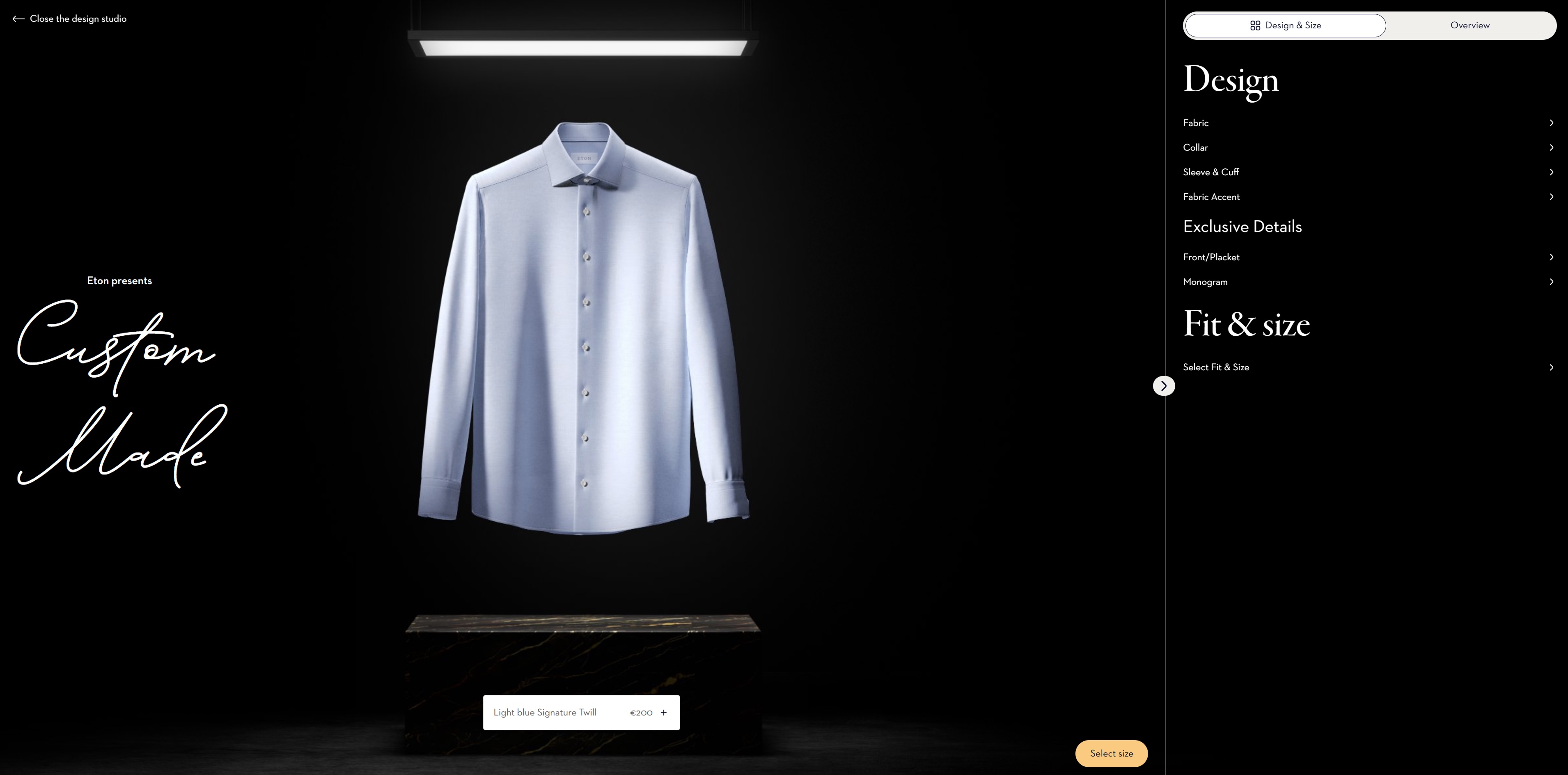 One of their most prominent examples of successful configurator implementation is their collaboration with Eton, one of the world’s most recognized shirt manufacturers. For them, they developed an advanced 3D configurator that allows users to fully customize their shirts.
Most of their clients come through word of mouth, as they find that recommendations remain the most important and effective source of new business. Many clients have been working with them from the very beginning or continue to return. In addition to those already mentioned, they highlight Mercedes and Lucid among their international clients, and Adria Mobil, Robeta, and Hosekra among their Slovenian partners.

Image Preparation for Robeta and Configurator Development
“Our clients are very diverse — from smaller companies to large corporations. They hire us to solve complex problems, or sometimes something entirely simple, to help their customers better understand their products. In any case, we are always happy to take on the task. As a provider, our goal is to make every product unique, as each client has a slightly different vision,” they explain.
Artificial Intelligence Is Becoming Increasingly Important
Their tools are integrated into leading software platforms in the textile industry, such as South Korea’s Clo3D, Singaporean-Israeli vStitcher, and India’s Tucatech. They have also incorporated artificial intelligence into their work, helping clients develop tools that enable them to bring products to market more quickly.
“Artificial intelligence is becoming an increasingly important part of our strategy. We have developed a product called EcoShot, the result of several years of development. Using AI, we enable the generation of high-quality visualizations without the need for traditional photography. EcoShot is specifically designed for the fashion industry and companies operating on a made-to-measure model,” he explains, adding that AI tools allow fashion collections to be visualized quickly, accurately, and at significantly lower costs.
Their goal is to develop an environment in which clients, with the help of their platform and AI support, can independently and efficiently build the visual presence of their brand, while Tronog provides the necessary technical and visual infrastructure.
From Asia Through Europe to the United States
Tronog is composed of a multidisciplinary team that includes experts from the textile industry and top-tier software developers. The core team consists of ten members, with additional employees based in Vietnam, Croatia, and the United Kingdom. Their work spans three time zones — Asian, European, and American — requiring flexibility and cultural understanding, yet always with the same objective: delivering outstanding products.
“We begin our mornings in the Asian time zone. Our Asian partners are very adaptable, and we resolve matters quickly. We typically hold meetings with Korea, Hong Kong, Singapore, and Vietnam, then continue with Europe, which is relatively straightforward in terms of time coordination. In the afternoon, usually around 2 p.m., we move on to the United States, with the West Coast being the biggest challenge due to late meetings,” describes Žlahtič. He emphasizes that the internet and communication tools have enabled faster and more intensive collaboration, while strong internal structure helps them work efficiently and save time.
“We See Boundaries Everywhere — and We Continuously Cross Them”
When recruiting new team members, they aim to attract people through interesting projects and consistently look for individuals who enjoy learning. Since the company’s founding, they have faced challenges in recruiting suitable talent, which is why they also seek candidates who may not have a traditional educational background but are capable of thinking critically and supporting strong solutions.
“You quickly sense whether someone is the right fit for your company. The most important quality is a willingness to learn. In my view, a person who is eager to learn and embrace change is the right candidate for our team. One of the key cultural shifts in the past four years is that we are all physically active. Often, in the morning at the office, we already discuss which sport we will pursue after work,” he notes, concluding with a forward-looking perspective.
“Although we constantly see certain limits in Tronog, we continue to push beyond them. If you have a team that enjoys tackling problems and boundaries — and refuses to accept that something cannot be done — then you have already won,” he concludes.
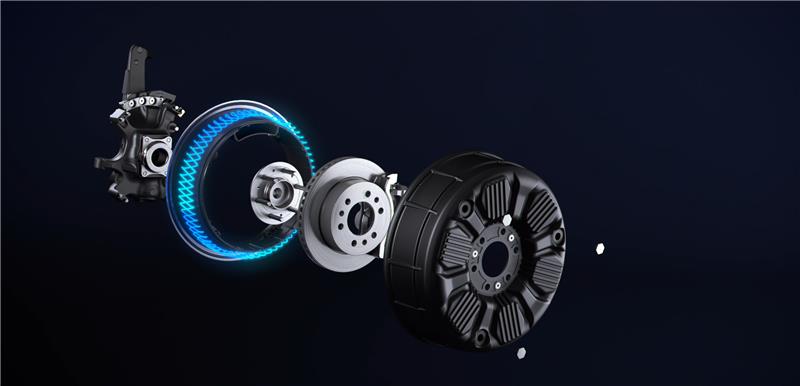
Promotional Video for Elaphe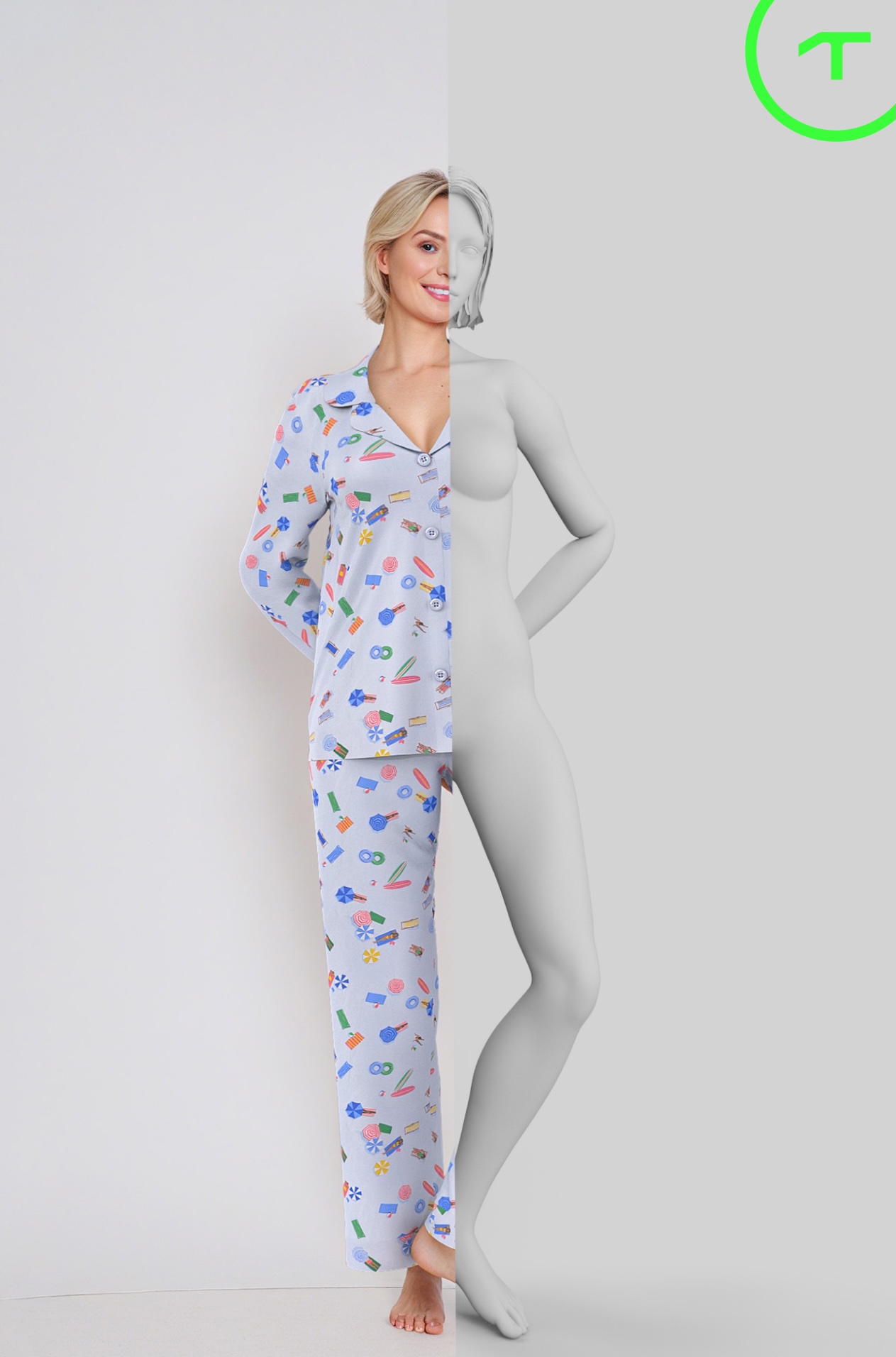
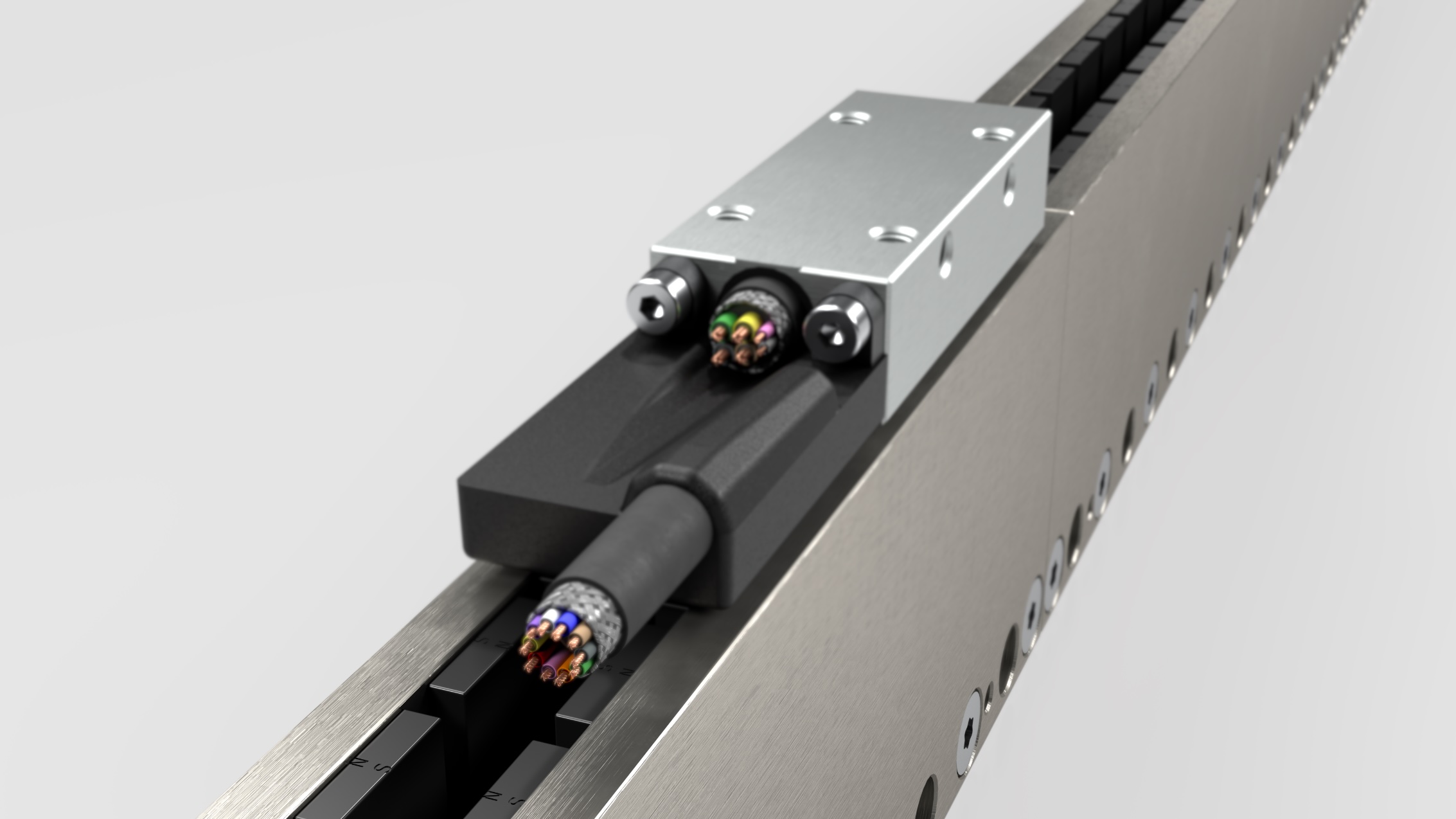
Product Visualization for Hypex